Education, activism and anti-slavery
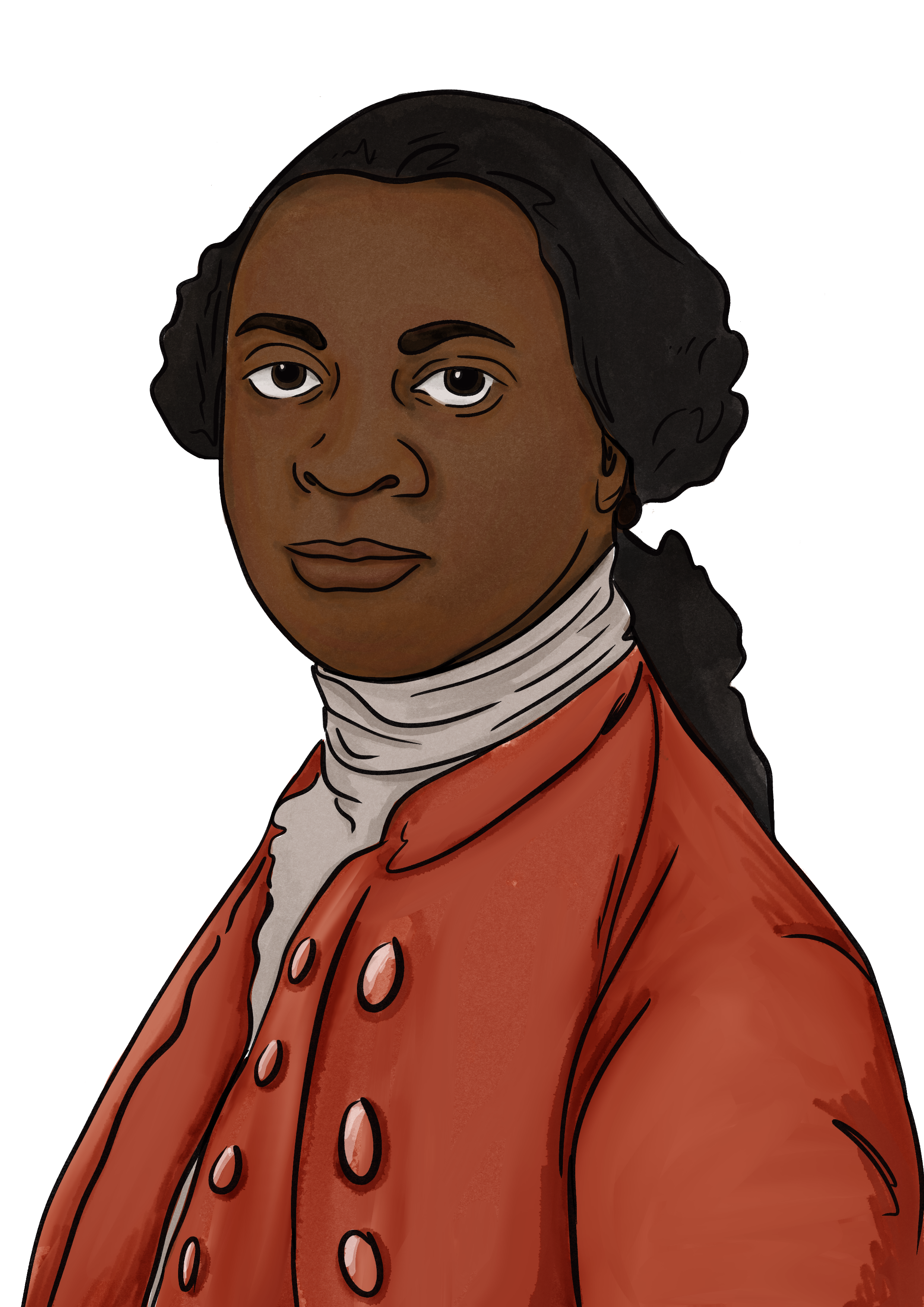
In 1789, Olaudah Equiano published his landmark text, The Interesting Narrative of the Life of Olaudah Equiano, Or Gustavus Vassa, The African Written By Himself. An immediate bestseller, nine editions of the book were published before his death in 1797, which equated to almost 30,000 copies – making it the literary sensation of the time. It was translated into Dutch and German, and endures today as one of the landmark written texts of the 18th century, as well as a powerful indictment of the trade in enslaved African people.
Equiano survived enslavement as a young child, trafficking, transportation, and life as an enslaved man on-board British ships to become a well-kent face and intellectual leader in the abolitionist movement. In 1783, it was Olaudah Equiano who would inform Granville Sharp about the Zong massacre, the mass murder of 142 Africans on-board the slave ship Zong, 50 miles from the coast of Jamaica.
He was a founding member of the Sons of Africa, an anti-slavery campaigning group established in London in 1787 and provided key support to legislation like Dolben’s Act of 1788, which finally regulated some of the horrific conditions on-board British slave ships.
And in the summer of 1792, Equiano visited Aberdeen, Edinburgh and Glasgow as part of a longer tour of Britain, to and campaign for the abolition of the transatlantic slave trade.
In the same year, the British parliament debated and eventually passed the slave trade abolition bill presented by Hull MP William Wilberforce. However, the insertion of the word gradual by then Home Secretary Henry Dundas into the bill meant that the abolition of the slave trade was delayed by another fifteen years, and it would be another 41 years until slavery itself was brought to an end.
Olaudah Equiano never saw the end result of his passionate campaigning. But it cannot be denied that his work made impact. Equiano’s writing provided us with one of the most detailed descriptions on enslavement and the experience of the Middle Passage. And the importance of education is underscored throughout.
In the very first passages of his account, when describing the idyllic childhood that would be shattered by his and his sister’s abduction, he describes his close relationship with his mother.
“As I was the youngest of the sons, I became, of course, the greatest favourite with my mother, and was always with her; and she used to take particular pains to form my mind.”
Equiano’s mother was his first teacher, though she would not be his last. It’s not hard to imagine that she would have been intensely proud of the fine scholarship and intellectual impact of her youngest and favourite son. Equiano’s narrative demonstrates throughout the value of education, scholarship and research, not just for its own sake, but in order to make positive change in the world.
And we can turn to some of the methods of Equiano and the other abolitionists to see how they developed their research and the means they used to educate the public about slavery and the slave trade.
How did they do that?
In short, diligent historical research. The abolitionists combined three main methods of research:
- Highlighting personal experiences and perspectives of people who had suffered enslavement;
- Gathering statistical data and evidence of the scale, reach, and deleterious impact of the trade in enslaved African people; and
- Using material culture, images and intangible culture to convey this history to a broad public audience.
These are all important methods which we try to bring to bear to the teaching of slavery in Scotland.
Why is it important to teach the history of slavery?
Two major academic interventions have been made in recent years in slavery studies that have profound implications for the teaching of history more broadly, and for thinking and learning about the world we live in today.
First, the history of capitalism
Slavery studies scholars have shown that slavery and the slave trade were fundamentally important to the development of economic, commercial, social, and political institutions around the Atlantic world – and even beyond, when we consider the production and import of South Asian textiles, Indian Ocean cowry shells, and East European iron. This research demands that we abandon the idea that slavery was a “peculiar institution”, bounded to a short and anomalous period, and rather that we must consider slavery both in its longue duree: from the late 15th century through to its afterlives in the late nineteenth century, and in the depth of its penetrations into economies, cultures and ideas.
Second, the re-writing of history from a different perspective
Enslaved people appear in archival documents recording them as bodies subjected to punishment, as property to be disposed of, and as criminals refusing to comply. Very little about their daily lives, their politics, their religious experience or viewpoints was recorded, let alone preserved. As historians and educators, we have an opportunity to redress that erasure and centre the experiences of enslaved people in our teaching.